Full Spectrum Infrared Sauna: Your Path to Optimal Health and Wellness
In recent years, full spectrum infrared saunas have gained significant popularity for…
Keep reading
How Long Does A Spray Tan Last?
Spray tans are a fantastic way to achieve a sun-kissed glow without exposing your skin to harmful UV rays. However, one of the most common questions people have is, “How long does a spray tan last?” In this blog post, we will explore the longevity of spray tans under various conditions to help you make the most of your radiant new look.
Swimming pools are often treated with chlorine, which can significantly impact the lifespan of your spray tan. Chlorine can strip away the outer layer of the tan, causing it to fade more quickly. Typically, a spray tan may last around 3-5 days if you frequently swim in a chlorinated pool.
By following these steps, you can enjoy swimming while maintaining your tan for a longer period.
A professional spray tan, applied by an experienced technician, generally lasts between 7 to 10 days. The longevity depends on several factors, including the quality of the solution used, your skin type, and how well you prepare and maintain your skin before and after the tanning session.

By following these pre- and post-tan care tips, you can enjoy a longer-lasting, even tan.
Daily showers can cause your spray tan to fade faster, especially if you use hot water and harsh soaps. Typically, a spray tan can last 5-7 days if you shower every day. However, with the right shower routine, you can extend the life of your tan.

By incorporating these tips into your daily shower routine, you can help your spray tan last longer and maintain its vibrant color.
The face is an area where spray tans tend to fade more quickly due to frequent washing, exfoliation, and exposure to various skincare products. Generally, a spray tan on your face will last around 3-5 days. To prolong the tan on your face, use a gentle cleanser, avoid exfoliating products, and consider using a gradual tanning moisturizer to maintain the color.
By following these face-specific tips, you can enjoy a radiant, even tan on your face for longer.
Salon spray tans, much like professional tans, typically last between 7 to 10 days. The key to longevity is in the preparation and aftercare. Exfoliating your skin before your appointment, keeping your skin moisturized, and avoiding activities that cause excessive sweating can help your tan last longer.
By following these tips and taking advantage of the expertise offered by salon professionals, you can enjoy a beautiful, long-lasting tan.

Beach activities, including sun exposure, saltwater, and sand, can all contribute to a shorter lifespan for your spray tan. Generally, a spray tan might last about 3-5 days if you spend a lot of time at the beach.
By taking these precautions, you can enjoy your time at the beach without sacrificing the longevity of your tan.
In conclusion, the longevity of a spray tan can vary depending on several factors, including your lifestyle, skin type, and how well you care for your tan. On average, a spray tan lasts between 5-10 days, but with proper preparation and aftercare, you can maximize the life of your tan. Whether you’re swimming in a pool, enjoying a day at the beach, or simply going about your daily routine, following these tips will help you maintain a beautiful, sun-kissed glow for as long as possible.
At Circles of Wellness Med Spa, we are committed to providing you with the best spray tanning experience. Our skilled technicians use high-quality products to ensure a natural, long-lasting tan. Contact us today to schedule your appointment and get ready to glow!
In recent years, full spectrum infrared saunas have gained significant popularity for…
Keep readingPedicures are a luxurious and rejuvenating experience that not only enhance the…
Keep readingDysport has gained significant popularity as a non-invasive cosmetic treatment designed to…
Keep reading
Botox vs Dermal Fillers – What’s the Difference?
If you’ve been thinking about investing in cosmetic treatments to refresh and rejuvenate your face, you’ve likely heard of Botox and dermal fillers. While both options aim to reduce the signs of aging and enhance your natural beauty, they function in different ways and offer different results. Here’s a guide to help you understand the key differences and determine which treatment is right for you.
Botox Cosmetic is a brand name for the botulinum toxin, a substance that relaxes muscle contractions. It’s commonly used to treat dynamic wrinkles, which are the lines that appear when you make facial expressions. By blocking signals from the nerves to the muscles, Botox softens the appearance of these wrinkles, giving the skin a smoother, refreshed look.
Other common FDA-approved neurotoxins are Daxxify, Dysport, Jeuveau (AKA ?Newtox?), and Xeomin.
Botox is a versatile treatment with both aesthetic and medical applications. Here are some key areas it’s commonly used for:
Besides its cosmetic applications, Botox has medical uses such as treating chronic migraines, excessive sweating, and certain muscle-related conditions.
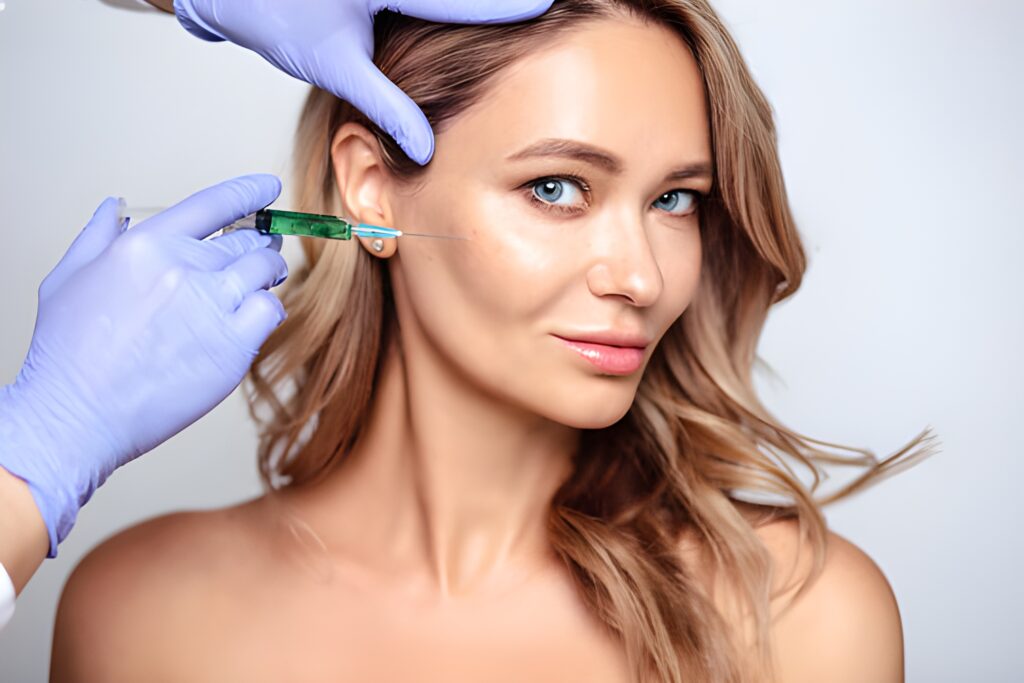
A Botox treatment involves injecting a purified form of botulinum toxin into targeted facial muscles. The procedure is quick, usually taking about five minutes. A mild pinching sensation may be felt during each injection. Afterward, it’s normal to see slight swelling or red marks, which usually subside within hours.
Afterward, adhere to guidelines like remaining upright for 20 minutes, avoiding intense physical activities for a couple of days and cleansing your face gently to prevent irritation.
Noticeable improvements usually take around 3-4 days to appear, reaching their peak within two weeks. Some other neuromodulators, like Dysport, might offer quicker visible changes, sometimes in just 1-2 days.
While Botox and other neuromodulators are generally safe, there can be minor side effects. These might include temporary redness, mild discomfort, or a slight headache. The downtime is usually minimal, allowing you to return to your regular activities right after the procedure.
The effects of Botox are temporary, usually lasting around three to four months. Over time, some clients notice that the treatment’s effectiveness increases, possibly because the treated muscles adapt to a more relaxed state.
The cost of Botox varies depending on several factors, including the brand used, the expertise of the provider, and the units required for the treatment. While typically more affordable than dermal fillers, Botox is still an investment in your appearance and overall well-being. For a personalized cost estimate, consult your healthcare provider.
Dermal fillers are gel-like substances that are injected into the skin to enhance facial contours, smooth lines, and add youthful plumpness to the face and hands. They come in a variety of types and brands, designed to meet a range of cosmetic needs.
Most fillers contain hyaluronic acid, a naturally occurring substance in the human body. Hyaluronic acid can hold multiple times its weight in water, offering instant hydration and volume. Among the most popular HA filler brands are Belotero, Restylane, and Revanesse.?
For those looking for more lasting results, fillers like Sculptra and Radiesse are available. Sculptra is composed of poly-L-lactic acid (PLLA), while Radiesse contains calcium hydroxylapatite (CaHA). These substances are more robust than hyaluronic acid and encourage long-term collagen production to support the skin?s natural framework.
Dermal fillers can achieve a wide range of aesthetic goals:
A skilled medical practitioner will evaluate the areas you want to target and discuss expected outcomes and possible risks. To minimize discomfort, a numbing cream may be applied, although some fillers already have an anesthetic in their formula. The injection process is generally quick but can vary depending on the area and amount of filler used.
After getting cosmetic injections, avoid direct sunlight and strenuous activities for 24 hours. Always wear sunscreen to protect the treated areas.
Results can vary from six months to more than a year, depending on the specific filler used.
Although dermal fillers are usually well-tolerated, some individuals may experience side effects like swelling, redness, or bruising at the injection site. These typically resolve within a week. Ice packs can help alleviate these symptoms, and it’s always good to consult your healthcare provider for any concerns.
The longevity of dermal fillers depends on the type and treatment area. Hyaluronic acid-based fillers like Versa and Restylane can last 3?6 months, while more durable fillers like Radiesse and Sculptra may offer results lasting up to 2 years.
The cost of dermal fillers can vary, influenced by factors such as the type of filler, your healthcare provider?s expertise, and the amount required for the desired outcome. Typically, dermal fillers can be more expensive than treatments like Botox, given their longer-lasting effects and the volume of the product used.
| Feature | Botox | Dermal Fillers |
| Target Areas | Dynamic wrinkles like crow?s feet, frown lines, and forehead lines | Static wrinkles, lost volume, and facial contouring |
| Active Ingredient | Botulinum toxin | Hyaluronic acid, calcium hydroxylapatite, poly-L-lactic acid |
| Duration of Effect | 3 to 6 months | 6 to 18 months, depending on the product |
| Procedure Time | 10-30 minutes | 15-45 minutes |
| Recovery Time | Minimal, usually no downtime | Minimal to moderate, depending on the area treated |
Absolutely! Many people opt for a combination approach to address different facial concerns simultaneously. Botox can be used to treat dynamic wrinkles, while dermal fillers can tackle volume loss and static wrinkles. A board-certified medical professional can tailor a treatment plan that utilizes both, depending on your aesthetic goals.
The choice between Botox and dermal fillers ultimately depends on your specific needs and what you’re looking to achieve. If you’re bothered by lines that appear or become more pronounced when you smile, frown, or make other facial expressions, Botox may be the best choice. If you’re looking to add volume to specific areas of the face, or smooth out static wrinkles, dermal fillers are more suitable. A consultation with our experienced team will provide personalized guidance.
Botox and dermal fillers are two effective, minimally invasive cosmetic procedures that treat different kinds of facial wrinkles. Each offers unique anti-aging benefits: while Botox is best for smoothing dynamic wrinkles, dermal fillers can restore lost volume and contour the face. Many people find that a combination of both treatments offers the most comprehensive and satisfying results. To explore your options and develop a tailored treatment plan, consult a medical professional.

Botox vs. Jeuveau: Understanding Your Options
In the world of cosmetic treatments, neuromodulators like Botox and Jeuveau have gained significant attention for their ability to smooth out fine lines and wrinkles. They’ve become synonymous with anti-aging, rejuvenation, and maintaining a youthful appearance. But how do they differ? And which one is right for you?
At Circles of Wellness in St. Augustine, FL, we’re here to guide you through the maze of cosmetic injectables. As a destination that offers a wide array of medical spa, day spa, and salon services, we’re committed to helping you make informed decisions about your skincare.
At the heart of both Botox and Jeuveau is a substance called botulinum toxin type A. Despite its intimidating name, this compound, when used in small, FDA-approved doses, has a variety of medical and cosmetic uses. Botulinum toxin type A is a neuromodulator, which means it works by temporarily interrupting the signals your nerves send to your muscles.
In cosmetic use, this interruption in nerve signaling helps relax the facial muscles that contribute to facial wrinkles and fine lines, particularly those that form from repetitive facial expressions such as frowning or squinting. These include the infamous crow’s feet around the eyes and glabellar lines, or frown lines, between the eyebrows. By relaxing these specific muscles, injectable treatments like Jeuveau and Botox allow the skin to smooth out, reducing the appearance of these lines and giving you a fresher, more rested look.
But that’s not all. Neuromodulators have other FDA-approved uses as well. They’re used in treatments for medical conditions like migraines and excessive sweating, or hyperhidrosis. This demonstrates the versatility of these powerful proteins.
Botox Cosmetic, also known as onabotulinumtoxinA, is undoubtedly the most well-known neuromodulator. Developed by Allergan, it was the first botulinum toxin type A formulation to be FDA-approved for cosmetic use and gained its initial approval for the treatment of glabellar lines in 2002. Its longstanding presence in the cosmetic world has given it a strong track record, and it’s often the first treatment people think of when it comes to injectable anti-aging solutions.
Botox injections work by blocking nerve signals in the muscles where it is injected, preventing muscle contraction and causing wrinkles to relax and soften. It’s widely used to treat forehead lines, crow’s feet (lines around the eye), and frown lines.
Beyond cosmetic purposes, Botox has also been approved for a variety of medical conditions, including chronic migraines, excessive underarm sweating (hyperhidrosis), and certain eye muscle conditions.
While Botox might be the household name, a newer player, Jeuveau, has been making waves in the field of cosmetic injectables. Jeuveau was developed by Evolus, a California-based pharmaceutical company, and specifically designed for aesthetic use. Approved by the FDA in 2019 for the treatment of moderate to severe glabellar lines, Jeuveau is the latest neurotoxin to hit the market.
Like Botox, Jeuveau uses botulinum toxin type A to temporarily paralyze muscles, smoothing out the appearance of lines and wrinkles. However, despite having the same active ingredient, Jeuveau has a different formulation process than Botox. While it’s still too early to definitively say how this impacts the results, some patients report noticing a quicker onset of effects with Jeuveau injections.
When it comes to the showdown of Jeuveau vs Botox, one isn’t necessarily better than the other. Instead, the right choice depends on your unique needs, goals, and circumstances. Let’s take a closer look at how these two powerhouse neuromodulators stack up.
Both Botox and Jeuveau are FDA-approved to treat fine lines and wrinkles by relaxing the underlying muscles. In clinical trials, both have shown similar efficacy and duration. The effects of both treatments typically become visible within a few days, peak at around two weeks, and can last anywhere from three to six months. It’s worth noting that while some patients report feeling that Jeuveau kicks in a bit faster, more research is needed to conclusively confirm this.
The experience of getting Botox or Jeuveau injections is essentially the same. Most people describe the injections as feeling like a quick pinch. A numbing cream can be applied before the procedure to enhance your comfort.
The side effects for both Botox and Jeuveau are also similar. The most common include mild swelling, redness, or bruising at the injection site, all of which typically resolve quickly.
Both Jeuveau and Botox are FDA-approved treatments that have been shown to be safe and effective when administered by a qualified professional. As with any cosmetic procedure, it’s crucial to have these treatments performed by a licensed injector, board-certified dermatologist or plastic surgeon to minimize the risk of complications.
The cost for both treatments can vary based on geographic location, the expertise of your injector, and the number of units required to achieve your desired results. As a newer product, Jeuveau was initially introduced at a lower price point to compete with Botox, but the costs are comparable in most practices.
Both Botox and Jeuveau can be safely combined with most other cosmetic treatments. Many people choose to pair their neuromodulator injections with other wrinkle treatments such as dermal fillers like Revanesse, RF microneedling, or chemical peels for a more comprehensive approach to facial rejuvenation. Discuss your goals with your provider to develop a treatment plan that meets your needs.
Of course, let’s dive a little deeper into these treatments’ versatility, as both Botox and Jeuveau have numerous applications beyond just cosmetic use.
While both Jeuveau and Botox are popularly known for their cosmetic uses?specifically, the reduction of fine lines and wrinkles?they also have a range of other applications, showcasing the versatility of these neuromodulators.
Botox, in particular, has received FDA approval for the treatment of chronic migraines. Patients suffering from this condition have found significant relief through regular Botox treatments, with injections typically administered every three months.
Both Botox and Jeuveau can be used off-label to treat hyperhidrosis, a condition characterized by excessive sweating. This application works by blocking the signals from the nerves that stimulate the sweat glands. The most common treatment areas are the underarms, palms, and soles of the feet.
Botox has also been used to treat certain eye conditions such as strabismus (crossed eyes) and blepharospasm (uncontrollable blinking or spasm of the eyelids). It works by relaxing the muscles responsible for these conditions, providing relief to the patients.
Both Botox and Jeuveau have shown efficacy in managing facial spasms. They work by blocking the nerve signals responsible for the muscular activity, thereby helping to reduce the frequency and intensity of spasms.
While Botox has more FDA-approved medical uses due to its longer track record, Jeuveau shows promising potential and is currently undergoing further studies to expand its approved uses.
Choosing between Botox and Jeuveau ultimately comes down to your personal preference and the advice of your dermatologist or cosmetic injector. Both offer a safe and effective way to reduce the appearance of wrinkles and fine lines, and each has its loyal fans. Whether you’re considering neuromodulator injections for the first time or you’re thinking about switching between brands, Circles of Wellness in St. Augustine, FL, is here to help guide you on your path to rejuvenation.
Remember, there’s no one-size-fits-all answer when it comes to skin care. The best way to determine which treatment is right for you is through a personalized consultation with our skilled and experienced team. We’re here to answer your questions, discuss your goals, and inform you of any ongoing specials and package deals. Schedule your appointment today!